Learn · Care Begins with Understanding
The more we understand, the better we can care.
Understanding retired racehorses is the first step toward caring responsibly. Rather than looking for one answer, we consider each horse’s circumstances and pace.
Six things to know
Six questions about life after racing
Select a question to explore the essentials.
01 What Is a Retired Horse? A retired horse has moved into a new stage of life after competing.
Every horse retires for different reasons and at a different time, depending on health, temperament, and competing history. Retirement is not the end—it is the beginning of building a life that fits the individual horse.
02 How Long Do Horses Compete? Horses begin training and competing at a young age, but the length of each career varies widely.
The length of the competing career varies by country and racing system, as well as by each horse’s health and performance. More important than the retirement date itself is having a safe transition plan for what comes next.
03 What Comes After Competing? Options include rest, rehabilitation, retraining for riding, educational programs, and responsible adoption.
No single path is right for every horse. Veterinary assessment and enough time to adjust are essential to finding a future that suits each horse's body and temperament. After racing, the following are possible careers: show jumping, dressage, eventing, polo, recreational riding, beginner riding, equine-assisted learning, breeding, companion horse, sanctuary, or full retirement.
04 How Do We Protect Their Health and Welfare? Good care includes regular checkups as well as nutrition, hoof and dental care, movement, rest, and a healthy social environment.
Horses often communicate discomfort through subtle changes. Daily observation, professional guidance, and a stable environment all play essential roles.
05 What Do Responsible Adoption and Support Look Like? Commitment matters, but so do long-term costs, suitable space, expert knowledge, and a realistic care plan.
Before adopting, consider facilities, budget, emergency plans, and the horse's need for companionship. If adoption is not possible, you can still provide steady support to a trusted equine welfare organization.
06 How Can Students Get Involved? Students can take part through field visits, documentation, campaigns, translation, design, and school projects.
Any direct interaction with horses must take place under the supervision of guardians and experienced professionals. Learning when to maintain a safe distance and how to approach horses respectfully is the first step.
Ask about student involvementA thoughtful transition
After retirement, every transition takes time.
The pace of each stage depends on the horse’s health and temperament and should be guided by professional assessment.
-
01
Initial assessment
We take time to understand the horse’s health, pain, history, and behavior.
-
02
Rest and recovery
The horse is given time to settle into a new environment and rest, physically and emotionally.
-
03
Exploring possibilities
Suitable activities and care environments are considered with the horse’s temperament in mind.
-
04
Ongoing observation
Changes and welfare are monitored and recorded well beyond the initial transition.
A note on accuracy
Context and sources come before statistics.
A racehorse’s career and path after retirement can vary greatly by country, era, racing practices, and individual condition. Future articles will identify their sources, reviewers, and most recent update dates. Decisions about treatment or adoption should always be made in consultation with veterinarians and experienced equine professionals.
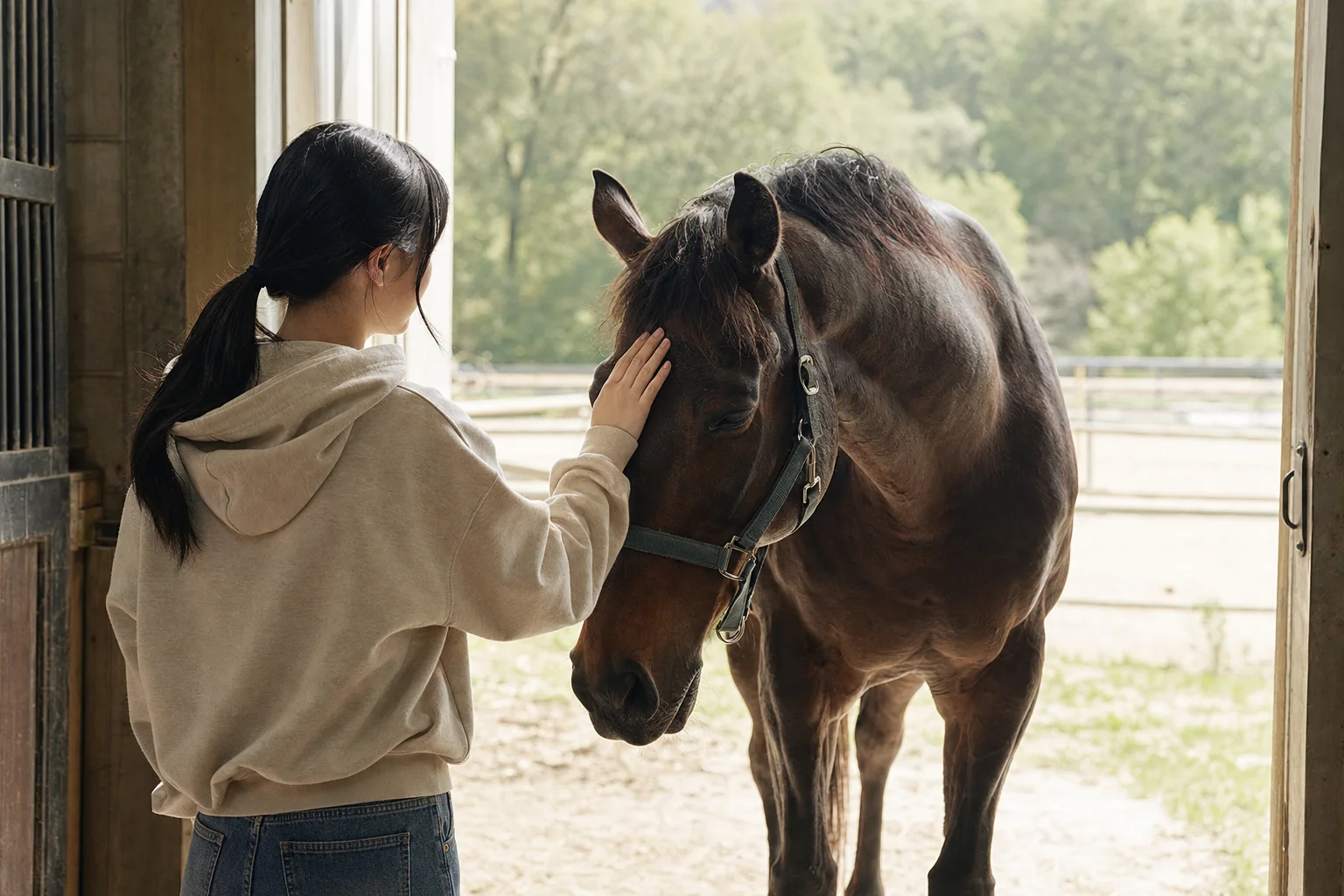
For students
Students can make a difference, too.
From sharing verified resources and designing campaigns to documenting fieldwork and volunteering after safety training, students can contribute through their own interests and talents.
Ask how to get involved